
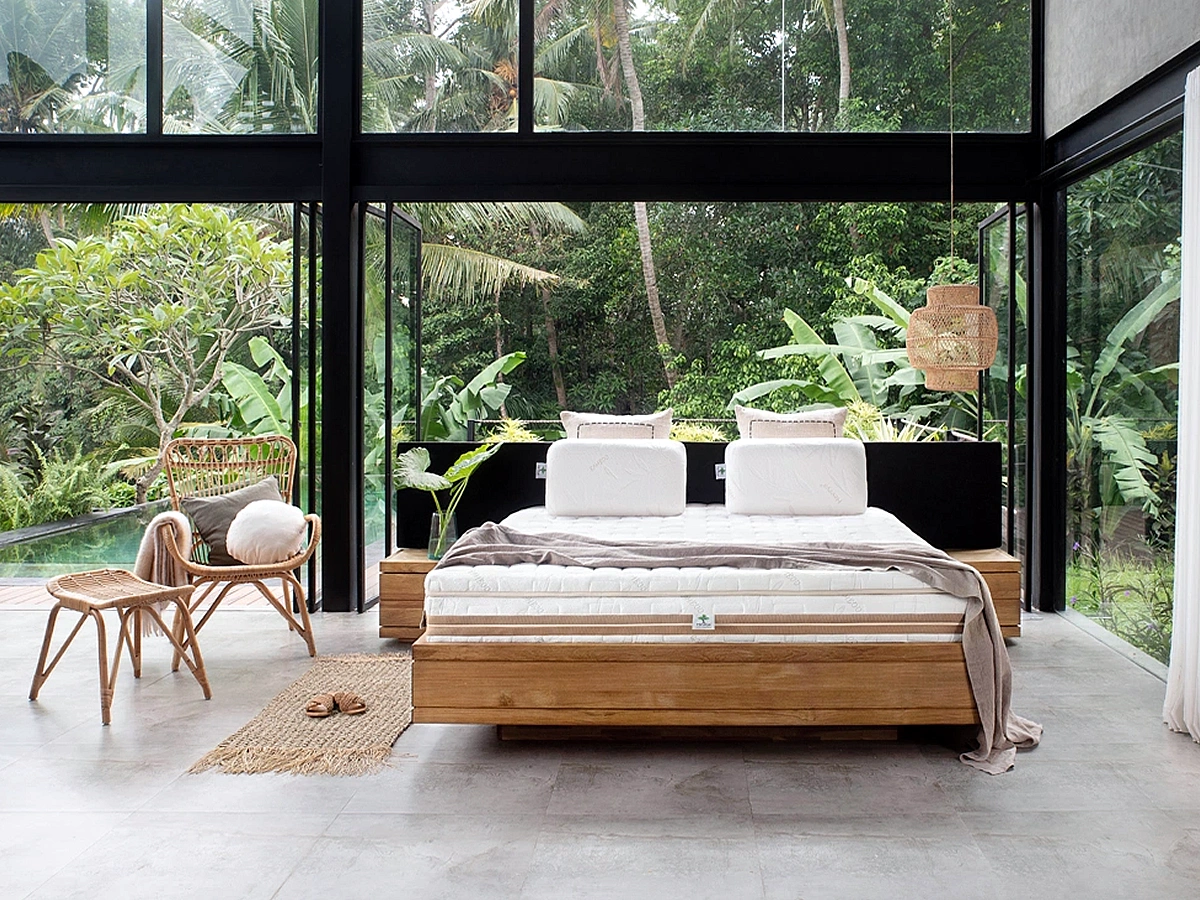
Your bedroom should be your own personal sanctuary – and it can reflect your values too. Creating an eco-conscious retreat doesn’t mean sacrificing style or comfort. The benefits speak for themselves: bamboo furniture comes from a plant that grows back within just 3 to 5 years, whilst LED lighting cuts energy use by 25% to 80% compared to traditional bulbs.
Whether you’re curious about the latest eco-friendly materials or hunting for practical green ideas for your home, this guide shows you exactly what to do. You’ll discover which sustainable materials work best for bedrooms, find out where to source them, and build your own sustainable bedroom checklist.
Ready to create a space that’s good for you and good for the planet?
Why your material choices matter more than you think
The surfaces, textiles, and finishes surrounding you each night do far more than look good. Every single choice influences three crucial areas: your health, the planet, and your long-term finances.
Health benefits you’ll actually notice
Natural materials create a cleaner breathing environment whilst you sleep. Here’s the problem with conventional bedroom furnishings: mattresses containing polyurethane foam, synthetic fabrics, and adhesives release volatile organic compounds and flame retardants that can cause respiratory problems and hormone disruption. Natural materials like wool, cotton, and latex offer hypoallergenic properties and natural resistance to dust mites.
Temperature regulation becomes effortless when you choose the right materials. Natural fibres adjust to your body temperature, keeping you comfortable regardless of the season. These materials allow your skin to breathe whilst wicking away moisture, addressing night sweating that synthetic materials make worse by trapping heat and retaining moisture. Your body releases fluids through more than 7 million pores during sleep, so beds need to breathe and wick away moisture effectively.
Pictured: Birlea Tilly 4FT 6 Double Upholstered Bed Frame, Available from Bedstar.
The chemical-free nature of organic materials eliminates exposure to harmful substances found in conventional bedroom furnishings. Wool acts as a natural flame retardant, removing the need for toxic chemical treatments that cause endocrine and thyroid disruption with adverse effects on nervous and reproductive systems.
Low-VOC finishes applied to wooden furniture maintain better indoor air quality – especially important in bedrooms where you spend extended periods.
Environmental impact that actually counts
Your material selections directly influence carbon emissions. Mass timber construction stores carbon and emits far less CO₂ than concrete or steel building methods, with UK research showing timber-framed homes can have 20% lower embodied emissions than masonry.
Replacing concrete with cross-laminated timber cuts emissions by up to 60%. A UK study of five mass timber buildings found they achieved 47% less upfront embodied carbon and less than 50% of whole-life embodied carbon.
Engineered wood stores approximately 582 kg CO₂/m³ whilst lowering emissions compared to concrete or steel. Natural plant fibres used in mattresses help absorb harmful CO₂ and vastly reduce organic waste produced during processing.
The construction industry accounts for approximately 37% of global emissions, making your choice of sustainable materials a direct factor in climate impact.
Takeaway tip: design solutions that intentionally reduce the number of materials used or can be easily disassembled for future reuse will have substantial impact.
Long-term savings worth considering
Initial costs tell only part of the story. Studies suggest lifecycle savings can exceed additional costs by 4 to 6 times over 20 years.
Green buildings generally offer lower energy and water use, reduced maintenance, and better resilience.
Durability means fewer replacements. Materials like recycled metal or concrete tend to have longer lifespans, reducing the need for replacements or repairs.
Natural materials prove inherently durable and highly valued, whereas foam mattresses wear out and even warp over time with replacement recommended after 2 to 3 years.
Energy efficiency delivers ongoing savings through reduced consumption and lower utility bills. Sustainable materials often provide these benefits without premium pricing – specifying new products with lower embodied carbon doesn’t cost more than materials with higher embodied carbon.
Your Essential Guide to Sustainable Bedroom Materials
Building your sustainable bedroom doesn’t have to feel overwhelming. Each material category brings its own benefits, and you can choose the options that work best for your space and budget.
Which fabrics will create your perfect sustainable sleep sanctuary?
Textiles: Organic Cotton, Linen and Hemp
Organic cotton makes a world of difference to your sleep quality. Grown without synthetic pesticides, fertilisers, or genetically modified organisms, organic cotton uses significantly less water than conventional cotton, which can consume up to 20,000 litres per kilogramme.
Look for GOTS (Global Organic Textile Standard) certification when you’re shopping for bedding – it guarantees hypoallergenic properties whilst eliminating exposure to residual chemicals. The fibres prove softer and more resilient too, withstanding washing better and retaining colour longer than regular alternatives.
Hemp emerges as a game-changing fabric for bed linen. The plant grows with very little water and zero pesticides whilst improving soil health by returning nutrients through its deep roots.
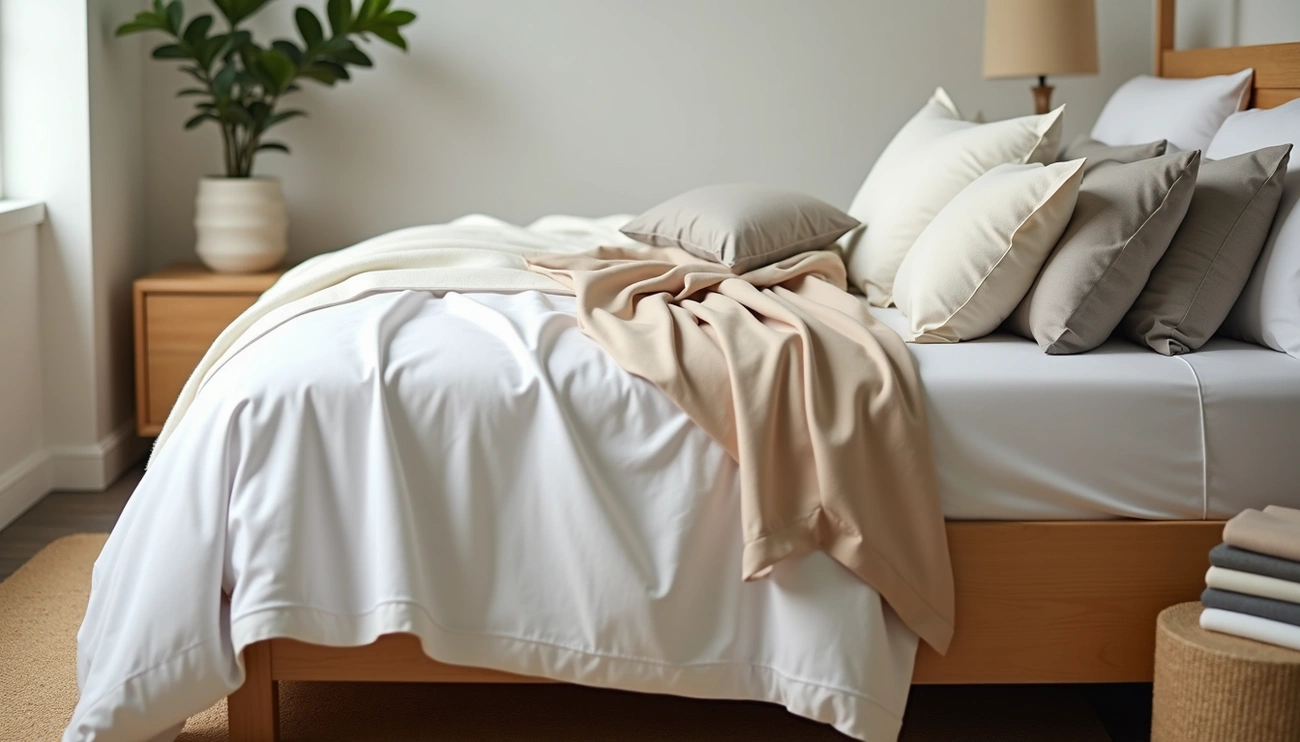
Hemp demonstrates exceptional renewability, reaching maturity in 90 to 120 days and allowing for multiple harvests per year.
Your sleep will benefit from the fabric’s inherent antibacterial, antifungal, and antimicrobial properties that prevent bacterial proliferation whilst its breathable and moisture-wicking qualities ensure comfortable rest. Hemp fabric possesses up to five times the tensile strength of cotton and triple the durability.
Linen offers full European traceability from fibre to fabric when certified by Masters of Linen™. Similarly, GOTS certified organic hemp bed linen provides sustainable credentials whilst delivering temperature regulation throughout the night.
Wood Options: Bamboo, Reclaimed and Certified Timber
Why choose bamboo for your bedroom furniture? The material reaches harvestable maturity in just 3 to 5 years, unlike trees that take decades.
Bamboo absorbs large amounts of CO₂, with some studies showing it removes 30 tonnes of CO₂ per acre whilst releasing 35% more oxygen than trees.
Despite being lightweight, bamboo proves surprisingly strong and comparable to hardwoods. Most importantly for your bedroom, bamboo furniture doesn’t off-gas VOCs into your sleeping environment.
FSC certification secures long-term sustainable wood sources, with more than 6,000 FSC-certified companies in the indoor furniture sector and over 500 based in the UK.
Reclaimed wood bedroom furniture reduces demand for new timber whilst offering unique character through distinct grain patterns and textures.
Reclaimed timber often surpasses new wood in durability, having already weathered decades of natural seasoning.
Natural Fibres: Wool, Cork and Jute
Wool carpets provide natural advantages including easy cleaning, natural insulation, sound absorption, and natural flame retardancy. Cork flooring offers excellent thermal properties, helping stabilise room temperature whilst absorbing sound. The material resists mould and mildew naturally.
Jute rugs bring hypoallergenic properties worth considering, with natural fibres that don’t trap dust and allergens the way synthetic materials do. Jute grows fast, needs very little water, and proves fully biodegradable.
Recycled and Upcycled Materials
Bedroom furniture crafted from 100% reclaimed and recycled wood comes with custom sizing options. Upcycling opens up exciting possibilities – salvaged wood, old doors, or vintage window shutters can become stunning headboards whilst repurposed nightstands and vintage crates provide clever storage solutions.
Low-VOC Paints and Finishes
Water-based paints contain VOC levels between 0.30 to 7.99%, whilst minimal VOC content ranges from 0% to 0.29%. Low VOC paints are typically considered to have less than 50 grammes per litre.
Your eco-friendly wood finish options include water-based varieties, natural oils (linseed, tung, hemp seed), wax finishes from beeswax or carnauba, and plant-based varnishes.
Which sustainable materials actually work best for your bedroom?
Don’t get caught up in marketing claims. The best sustainable materials prove their worth through real performance data and lasting quality. Traditional eco-friendly options continue to compete strongly with exciting new innovations entering the market.
Traditional sustainable champions you can trust
Bamboo and reclaimed wood remain some of the most loved sustainable bedroom materials for good reason. Bamboo’s renewability stays unmatched, with harvest cycles of 3 to 5 years compared to decades for timber forests.
Recent life cycle assessments reveal bamboo scrimber flooring produces 3.11 kg CO₂-eq per m², with drying, carbonization, and adhesive use representing the main emission hotspots.
The eco-friendly furniture market reflects this growing demand, projected to expand from approximately £34.15 billion in 2022 to £66.55 billion by 2030 at 8.6% CAGR.
FSC-certified solid wood delivers responsible sourcing with protections for biodiversity and local communities. Organic cotton grown without harmful pesticides creates GOTS-certified bedding that’s biodegradable and promotes healthier indoor environments.
Linen union blends linen with cotton to strengthen the fabric, reduce wrinkling, soften texture, and provide better drape whilst remaining more affordable than pure linen.
Exciting new materials worth watching
Tencel represents a breakthrough worth shouting about. Derived from sustainably sourced wood pulp (primarily eucalyptus), the closed-loop production process recycles water and solvents, capturing and reusing 99% of solvents.
The fabric’s moisture-wicking properties make it naturally antibacterial, reducing odour.
Some of the most innovative materials transform waste into bedroom essentials. Materials developed from banana fibres, orange peels, and Japanese knotweed transform agricultural waste into durable alternatives.
Mycelium tiles grown from fungal root systems combine with domestic waste materials to create 100% biodegradable surfaces.
Seawool converts mussel beards (byssus threads) from aquaculture waste into springy upholstery foam, replacing petrochemical-based options. Oyster shells with identical chemical makeup to limestone now substitute for traditional concrete.
How do they actually perform?
Engineered bamboo demonstrates excellent strength-to-weight ratio, slightly outperforming many hardwoods in durability tests.
Solid wood remains naturally hygroscopic, expanding and contracting with humidity changes that can cause warping if room humidity swings wildly.
For indoor air quality, base material matters less than applied finishes; prioritise low or zero-VOC finishes, GREENGUARD Gold labels, and TSCA Title VI or CARB Phase 2 compliance.
Natural fibre mattresses prove inherently resilient. Materials like horsehair and natural latex maintain support properties far longer than synthetic foams.
Natural materials remain durable and highly valued, whereas foam mattresses wear out with replacement recommended after 2 to 3 years.
Takeaway Tip: Choose materials based on how you’ll actually use your bedroom, not just environmental credentials.
Keep your sustainable choices looking their best
Organic cotton, linen, and hemp bedding wash at temperatures up to 40°C using gentle cycles. Avoid fabric softeners that coat fibres with silicon-based chemicals, reducing breathability over time.
Wood furniture benefits from natural oils or wax applied every six months to nourish surfaces. Both bamboo and solid wood require similar care: wipe spills quickly, use coasters, avoid harsh cleaners, and keep out of prolonged direct sun.
Pictured: Timberland Wooden Ottoman Bed – Natural. Available from Bedstar.
Where can you find these sustainable materials?
Knowing which eco-friendly materials work best for your bedroom is just the beginning. The real challenge? Finding reliable sources that deliver on their sustainability promises.
Hunting for treasures in secondhand and vintage shops
Vintage furniture wins hands down when it comes to sustainability credentials. Here’s why: antique pieces pass from owner to owner approximately every 30 years, whereas new furniture lasts just 15 years. This longevity means the environmental impact of antique furniture measures nearly six times less than new pieces.
Reclaimed bedroom furniture tells a story. Crafted from timber salvaged from old buildings, each piece carries unique character marks and grain patterns you simply can’t replicate.
Pictured: Monarch Ottoman Bed Frame – Warm Oak, Available from Bedstar.
Look for certified sustainable suppliers
Don’t get caught out by greenwashing. FSC certification provides credible verification of responsible sourcing, with more than 6,000 FSC-certified companies operating in the indoor furniture sector and over 500 based in the UK. The certification lets you trace wood products from well-managed forests and recycled sources.
Shared Earth stocks ethical products from World Fair Trade Organisation members, connecting you with small-scale producer groups organised in family cooperatives. Keep an eye out for GOTS certification for organic textiles and GREENGUARD labels for low-emission furniture.
Connect with local artisans and makers
Supporting local craftspeople cuts down on transport emissions whilst creating unique pieces for your space. The Citizenry partners with artisans from Mexico to Mali, Ireland to India, creating handcrafted pieces in fair and safe environments whilst investing proceeds back into artisan communities through entrepreneur development grants. Local workshops keep carbon footprints minimal through reduced transportation.
Copeland Furniture shows how it’s done, generating 95% of their energy onsite with solar installations offsetting over 1.5 million pounds of CO2 emissions annually.
Explore online marketplaces with purpose
The internet opens up endless possibilities for eco-friendly furniture hunting. Etsy connects you with artists who reclaim and upcycle furniture, from wooden headboards to pallet coffee tables, with carbon-neutral shipping. Wearth partners with over 250 eco-conscious brands in the UK, allowing you to shop by specific values like plastic-free or made in UK.
GOODEE vets every item for environmental and social impact, including responsible sourcing and heritage craft preservation.
Takeaway Tip: Start your search locally, then expand online. You’ll often find better prices and unique pieces whilst supporting your community.
Your sustainable bedroom checklist: where to start
Ready to turn your eco-friendly bedroom dreams into reality? Creating a structured plan helps you make smart choices without feeling overwhelmed.
Start with what you actually need
Measure your bedroom dimensions carefully, noting door, window, and radiator locations before purchasing anything. Position furniture against walls where possible and keep the centre area open. Smaller, well-designed bedrooms need fewer resources to furnish, heat, and cool, resulting in reduced environmental impact.
Ask yourself these key questions: Do you need storage? How do you actually use this space?. Restraint proves essential, as fewer pieces mean lower environmental impact and a more peaceful atmosphere.
Don’t throw everything out at once
You’ll almost always find a nicer old version of something for the same cost as an equivalent new one. Old pieces bring the spirit of a life lived with patina impossible to replicate. Reclaimed wood paired with sleek modern elements creates harmonious balance whilst adding character and history. Consider how existing objects can be repurposed before spending money.
Takeaway Tip: Start with one sustainable swap and build from there.
Plan your upgrades in stages
Step-by-step retrofits provide additional control over cashflow whilst committing to smaller figures reduces stress. Undertaking stages only when funds become available avoids interest charges on loans. Besides, having time to shop around for the best deal without trades on-site pressure proves invaluable. Programming phases to continue living comfortably saves relocation and rental costs.
Track your environmental impact
Carbon footprint calculation tools help quantify your bedroom’s climate performance. Take the case of a continental bed: life cycle analysis revealed a total carbon footprint of 610 kg CO2 equivalents, including production, one top mattress replacement, and incineration. CO2e values quantify kilogrammes of greenhouse gases emitted in making furniture and its expected lifespan.
Why not keep a simple record of the sustainable swaps you make? You’ll be surprised how quickly the positive changes add up.
Your bedroom sanctuary doesn’t need to be perfect from day one. Whether you start with organic cotton bedding or swap to low-VOC paint, each sustainable choice makes a difference to your health and the planet.
Don’t feel pressured to change everything at once. Pick one area that matters most to you, then add more eco-friendly pieces as your budget allows. You might hunt for vintage furniture at secondhand shops, source FSC-certified wood from local suppliers, or discover handcrafted pieces from artisan communities.
The best part? Your sustainable bedroom reflects who you are and what you care about. Every natural material you choose, every reclaimed piece you find, contributes to a space that’s uniquely yours whilst supporting a healthier home and environment.
Ready to make your first sustainable swap?








Comments are closed.